
Spearfishing Knife Guide: How to choose the best one
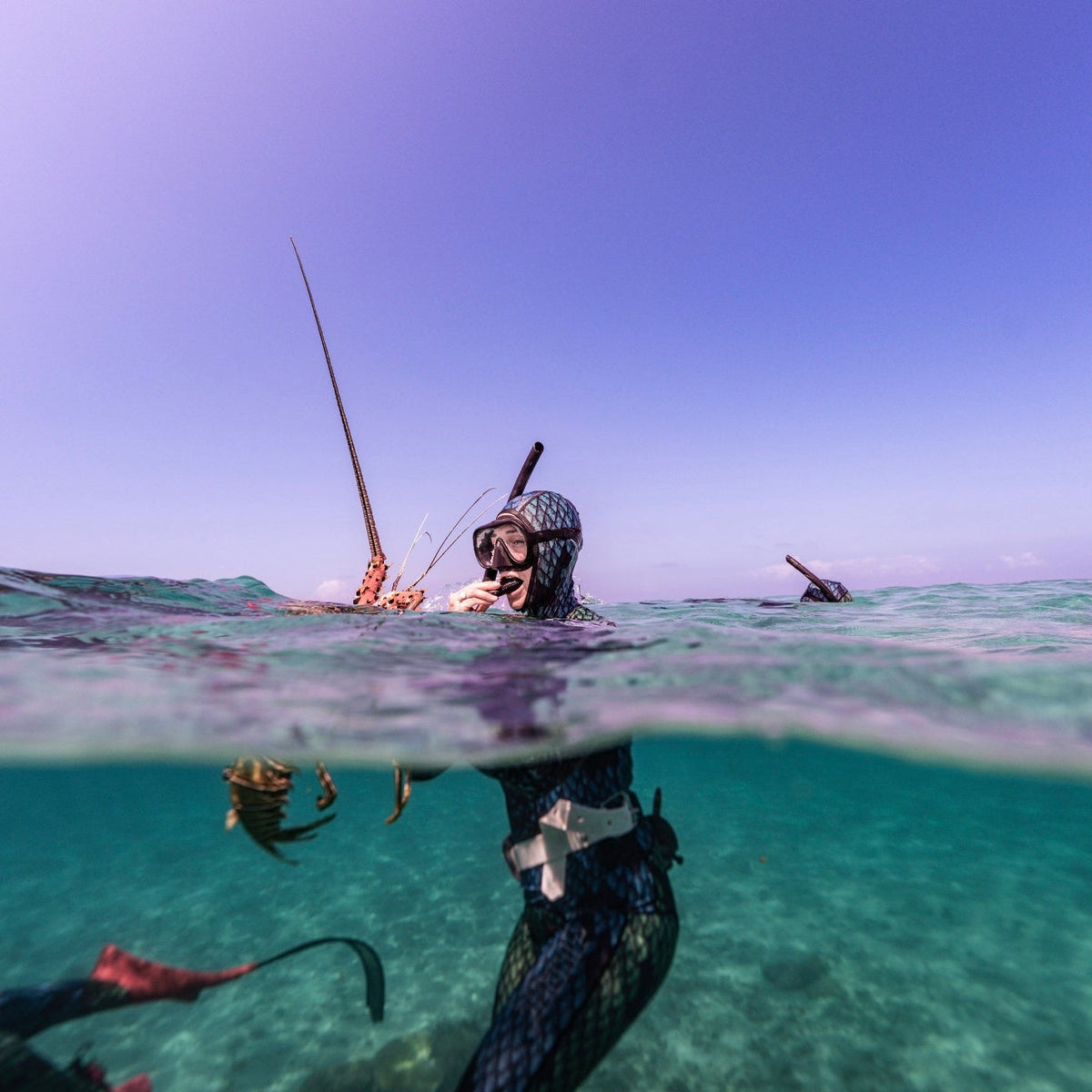
A spearfishing knife is safety equipment first and a fish tool second. Looking for the best spearfishing knife usually turns up blade comparisons, when the thing most likely to matter on a bad day is whether you can get the knife out of its sheath with one hand while tangled in line.
Below we cover what the knife is actually for, why the sheath matters as much as the blade, blade shape and serration, the steel and titanium question, what to spend, and how to stop losing them.
What the Knife Is Really For
Dispatching fish is the obvious job. The job that justifies carrying one on every dive is cutting yourself free.
-
Entanglement. Float line, shooting line, discarded fishing line, netting and kelp. This is the emergency case.
-
Dispatching fish quickly and humanely. Spiking the brain, sometimes called iki jime, kills the fish immediately when done accurately and, with prompt chilling, helps preserve flesh quality.
-
Freeing a stuck shaft from rock or coral, which some handles are shaped to help with.
-
General work such as cutting line, prising shellfish where permitted, and trimming rigging.
Thinking of it as a safety tool changes the priorities. Diving organisations describe a knife or cutting device as the tool for escaping entanglement, and stress that it must be reachable even if one arm is restricted. It must be on you, reachable with either hand, and sharp enough to cut line immediately.
The Sheath Matters as Much as the Blade
Experienced divers are blunt about this. The sheath accounts for a large share of whether a knife is any use, because a poor one either loses the knife or cannot be reached when it counts.
What to look for
-
Positive retention. It should hold the knife through a shore break and a long swim, and still release when you pull deliberately.
-
One-handed draw. Training agencies specify a sheath that secures the knife while allowing one-handed release. Practice it. If it takes two hands or a careful look, it fails the emergency test.
-
Carry a position that suits you. Inner calf, thigh, waist belt or forearm. Forearm and waist carry are quicker to reach, leg carry stays out of the way.
-
Nothing to snag. Straps and clips that catch lines defeat the purpose.
Try it in gear, not in the shop
A sheath that works over bare skin can be awkward over a wetsuit and weight belt. Mount it where you will actually wear it, put the suit on, and practise drawing until it is automatic.
Blade Shape, Size and Serration
Bigger is not better. Most spearfishing knives have modest blades because they are working in close quarters.
|
Feature |
What to choose |
Why |
|
Blade length |
Commonly around 7 to 12 centimetres, though some guides favour up to 15 |
Long enough for dispatch and line, short enough to carry and control |
|
Point |
Sharp, fine point |
Quick, humane dispatch and precise work |
|
Serration |
Partial, on one side |
Serration cuts line and netting, the plain edge does everything else |
|
Blunt tip option |
Only for prising work |
Less likely to puncture inflatables, but poor for piercing tasks such as dispatch |
|
Handle |
Grippy when wet, usable in gloves |
Cold hands and gloves make slick handles dangerous |
|
Shaft notch |
Useful if offered |
Helps turn and free a shaft stuck in rock |
Why fully serrated blades are less popular
A blade serrated along its full length becomes a single-purpose tool. One serrated section plus a plain edge handles line, netting and fish work, which is why most divers and retailers favour it.
Steel or Titanium?
This is a maintenance decision more than a quality one, and it is worth being honest about corrosion. Divers who spend their lives in salt water will tell you that every blade rusts eventually, including expensive ones.
|
Material |
Strengths |
Trade-offs |
|
Stainless steel |
Takes and holds a keen edge, easy to sharpen, inexpensive |
Can spot or pit after salt exposure, particularly if salt is left on it |
|
Titanium |
Strong corrosion resistance in seawater, light, low maintenance |
Usually softer than hardened knife steels, so edge retention is generally poorer, and it costs more |
Choose steel if you will rinse and dry your gear properly and like a very sharp edge. Choose titanium if your knife lives in a wet dive bag and you would rather not think about it. Worth noting that stainless grades vary a great deal, so a good marine grade looked after properly will outlast a cheap blade neglected. Avoid brittle materials such as ceramic for a general purpose or emergency knife, since they chip and fracture under twisting, prying or impact rather than flexing.
What to Spend
Here is the part most guides avoid. Spearfishing knives get lost and broken, so buy accordingly.
-
Many active divers replace knives regularly and deliberately keep to modest prices
-
A sound, sharp knife with a good sheath beats an expensive blade with a poor one
-
If you want a premium knife, fit a lanyard and accept it will still pick up marks
The two-knife approach
A common setup is a small, very sharp blade kept purely for emergencies, plus a working knife for fish and general tasks. It solves the problem of blunting your safety tool on routine jobs, and it means you are never reluctant to draw the knife you actually need.
How to Stop Losing Them
Loss is the main reason divers refuse to spend money on knives, and it is largely solvable.
-
Fit a lanyard. A short length of bungee from the handle to your belt or gear, with the knife still holstered normally, prevents almost all losses
-
Keep it ditchable. Attach to a belt you can release rather than tying yourself to gear you cannot shed
-
Check the sheath each dive. Retention clips wear out and straps perish in the sun
-
Put it in the same place every time. Habit is what makes the draw automatic
Care that actually extends life
Rinse in fresh water after every dive, including inside the sheath where salt collects. Dry the blade rather than leaving it in a wet sheath, touch up the edge regularly, and keep a light film of oil on steel blades if you store them for a while. Rinsing the sheath is the step most people skip and the reason many knives corrode, since salt and grit stay trapped inside it. Manufacturer instructions for dive knives say the same thing, rinse and dry both the blade and the sheath before storage.
What Holds Up and What Is Preference
Well supported
-
A knife is carried for entanglement first, and diving bodies stress it must be reachable and drawable with one hand, including when an arm is restricted.
-
A serrated section suits rope, line and netting, while a plain edge handles general cutting and is easier to sharpen.
-
Rinsing the blade and the inside of the sheath in fresh water after each dive is standard manufacturer guidance.
-
Spiking the brain kills a fish immediately when done accurately and, with prompt chilling, helps preserve the flesh.
Depends on the knife
-
Titanium generally resists seawater better and holds an edge less well, but stainless grades vary enormously, so a good marine grade maintained properly can outperform a poorly chosen titanium blade.
-
Stainless does not inevitably rust. It spots and pits when salt is left on it, which is why the rinse matters more than the grade.
-
Blade length advice varies, with common recommendations spanning roughly 7 to 15 centimetres depending on who is writing.
-
Blunt versus pointed tip guidance comes mostly from retailers and dive media rather than formal testing.
A Quick Buying Checklist
-
Can you draw it one handed, in gear, without looking?
-
Does the sheath hold it through a surf entry?
-
Is the blade in the 7 to 12 centimetre range with a sharp point?
-
Does it have one serrated section and a plain edge?
-
Does the handle grip when wet or gloved?
-
Have you decided between steel and titanium based on your maintenance habits?
-
Can you fit a lanyard to it?
What To Do Next
Decide where you will carry it before you choose a blade, because that narrows the options quickly. Then pick the knife that fits that position and your maintenance habits.
How Aimrite can help
Aimrite is an Australian veteran owned family business building gear for local conditions. Browse the spearfishing knife range, and if you are putting a full setup together our float guide covers the rigging that most often causes entanglement, while our speargun guide helps with gun choice. You can also view the speargun range or get in touch for advice on carry setups.
Key Takeaways
Treat your knife as safety equipment. Choose the carry position and sheath first, then a modest blade of around 7 to 12 centimetres with a sharp point and one serrated section. Pick steel for edge quality or titanium for low maintenance, and accept that everything corrodes in salt water without rinsing. Fit a lanyard, rinse the sheath as well as the blade, and keep a dedicated emergency blade if you can, so the knife you depend on is always sharp.